Background:
In my first year at university, I began compiling a list that includes all the films I have watched in my life- 26 years at the time. When I told people about it, they raised eyebrows. First around the question of why such a list was needed at all, and second around the very possibility of creating such a thing. Many argued that a person simply cannot remember all the films they have watched in their lifetime.
In my view, this skepticism belongs to an older era, one in which information was stored far away from us and without real accessibility. In practice, however, websites such as IMDb and Wikipedia contain lists (sometimes exhausting ones) of the films and series in which actors, actresses, cinematographers, directors, editors, and screenwriters have taken part. Pick any actor as an example and see for yourself. With this tailwind, sometime during courses, and virtually infinite access to the web, I set out on my way. I began digging into filmographies, Wikipedia entries of studios, lists of winners of prestigious awards, and eventually reached around 800 films. As I have already mentioned on other pages of this site and in various Facebook posts, this process also led me to create a short experimental film titled "MVP" and to write a research seminar paper in the field of cognitive film theory.
What's new?
The new development I want to describe here is my use of the API (Application Programming Interface) of The Movie Database (TMDB), through which I edited the list — now consisting of 1022 films — to add release years to each title. By adding the simple function
“=MOVIEYEAR_HE(another cell)”
it generated the release year of every film. In order not to rely on it completely, I also went through the list manually. This is how I made sure it understood that "The Dreamers" I had watched was the film by the Barbash brothers (1987), and not Bertolucci’s (2003). A small detail that takes only about three hours of work with two screens side by side…
“=MOVIEYEAR_HE(another cell)”
it generated the release year of every film. In order not to rely on it completely, I also went through the list manually. This is how I made sure it understood that "The Dreamers" I had watched was the film by the Barbash brothers (1987), and not Bertolucci’s (2003). A small detail that takes only about three hours of work with two screens side by side…
Finally, under review of the films and their years, I created the following summary table:
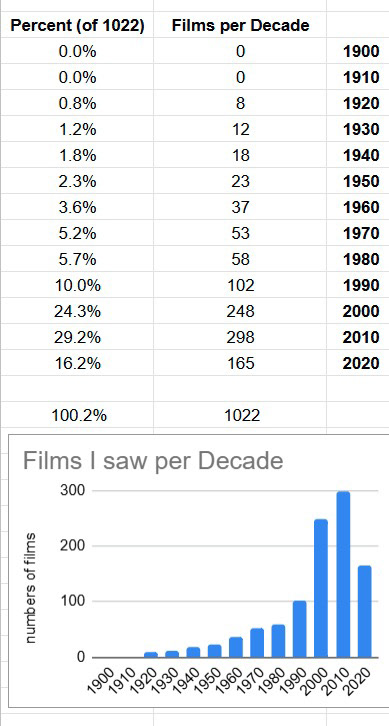
And here lies the real value of the effort. Out of all the films I have watched- and as a film student who did not cut corners and watched everything that was required- 80% of the films I have seen are from my birth decade onward; 90% were made after 1970; over 95% were made after World War II; and only 20 films were made pre-WW2. The oldest film I have watched is "Nosferatu" (1922), followed by "The Kid" and "Battleship Potemkin" (1925). Much as I like to think of myself as someone knowledgeable about early cinema, I still have a long way to go before I can truly claim that.
So… what does this say about film distribution today?
Today, people consume films through the following channels — streaming, piracy, television movie channels, cinemas, film festivals, YouTube, and community events. It seems to me that this list even reflects the actual distribution of viewing volume, in descending order. But which of these actually enables and promotes older cinema?
Streaming platforms do include older films, but they are promoted on the front page only under rare circumstances.
Piracy includes everything. Some sites even curate and promote films, for various reasons.
Cinemas almost never include films that are more than a year old.
Film festivals aim both to expose audiences to new creators and to “pay tribute” to older cinema, but will usually choose a living filmmaker who can come and give a talk.
YouTube is flooded with music clips, tutorials, and films. An old film whose copyright has expired may exist there without us ever knowing.
Piracy includes everything. Some sites even curate and promote films, for various reasons.
Cinemas almost never include films that are more than a year old.
Film festivals aim both to expose audiences to new creators and to “pay tribute” to older cinema, but will usually choose a living filmmaker who can come and give a talk.
YouTube is flooded with music clips, tutorials, and films. An old film whose copyright has expired may exist there without us ever knowing.
When it comes to community events, I have an interesting story. By the time I began my studies, I had already seen "Mary Poppins" (1964) and "E.T." (1982). They were screened at the cultural hall of my regional council- a council that is neither particularly wealthy nor culturally leading. Children’s tickets were probably cheaper than at the commercial cinema in Haifa. In addition, the films were familiar to my parents and did not require checking whether the content was suitable for children. As a result, going to the regional cultural hall was something we did quite often. Since no one— including my parents — bothered to tell me that these films were already decades old, I was convinced they had been made that very year. Compared to Shrek, which I watched at home, they seemed poorly animated, for reasons I did not understand at the time. By contrast, my classmates at university who grew up in cities with malls but without a “local cultural committee” were familiar with much more contemporary cinema. Either way, community centers and cultural halls also promote films from a range of years that does not include the very beginnings of cinema.
One of the outcomes of this graph, which would be even sharper among young people who did not study film studies, concerns the interpretation of the phrase “old film.” I know people who refuse to watch a film released before the year 2000, while others insist on calling a ten-year-old film “old”; In the series "Black Mirror", an episode was made as a homage to a fictional “old film” shot in the style of the 1940s (“Hotel Reverie”). At the same time, Israeli films that are more than just three years old are almost impossible to find.
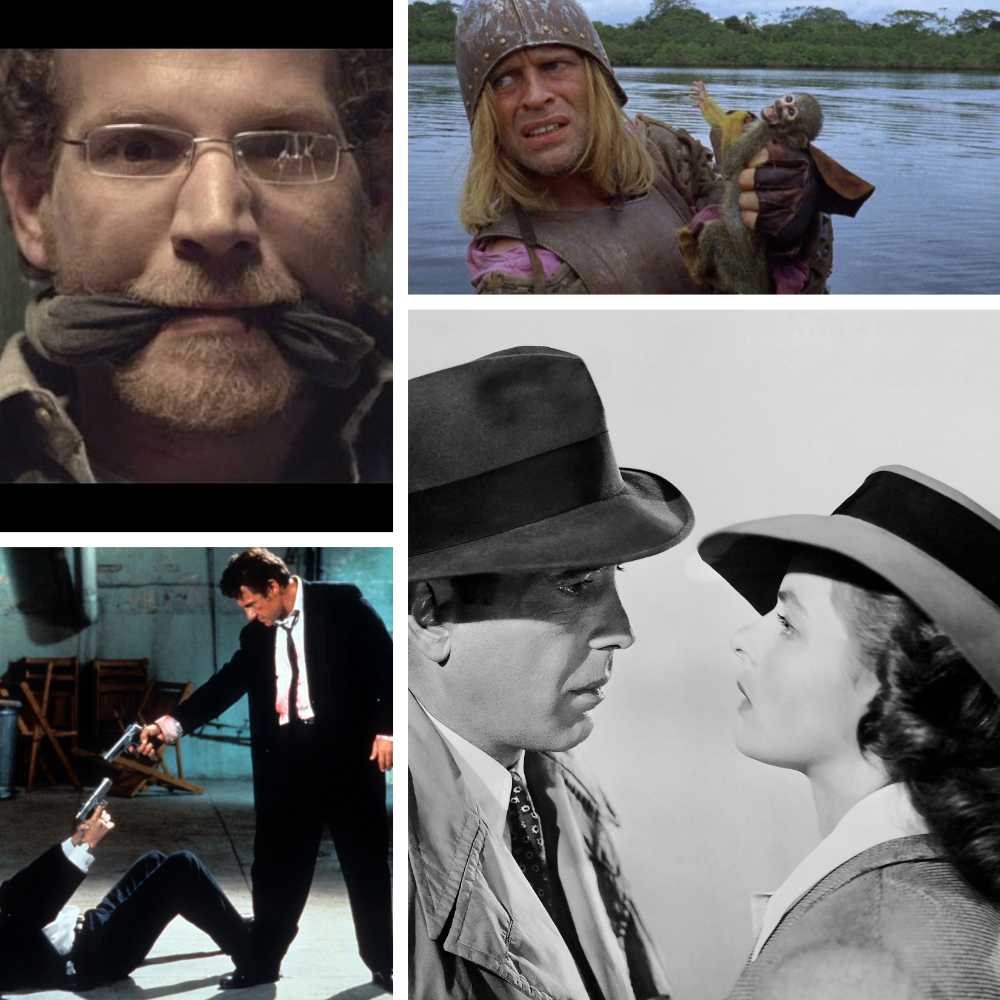
I do not think the graph can be balanced. Finding 300 films from the first decade of the twentieth century is impossible. I hope I am not distorting the words of Dr. Ori Levin, with whom I studied a seminar on the subject, when I say that during that period the dominant format was the one-reel film, roughly fifteen minutes in length. There is also no point in trying to balance the graph. A person who does not study early cinema will not enjoy watching films from 1900. They will not find anyone to talk to about them, and their messages will usually not address the reality in which they live.
I wonder whether films that are more than a hundred years old will always appear unnecessary to us. For example, in 2060, only a single generational distance from us, will a film like "Vertigo" (1958), which continues to be highly celebrated even today, be considered too old to watch? Are market forces, technology, natural developments in society, or the constant need for novelty what repeatedly drive us to push truly old films away from audiences?