UX vision of the experience
There are extreme cases in life, where peoples’ reactions are restricted. When we are locked in a room- we cannot get out unless we find the key. When we are on our backs under someone willing to hurt us- we may respond using our heads alone. “At gag – Act!” wrote my teacher Eran Hadas.
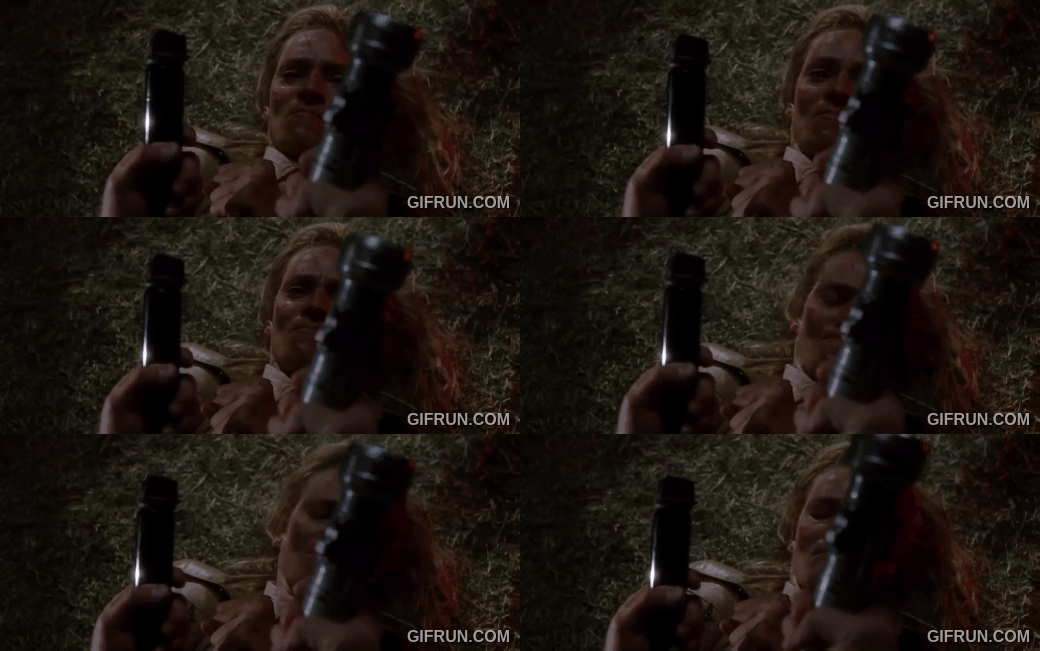
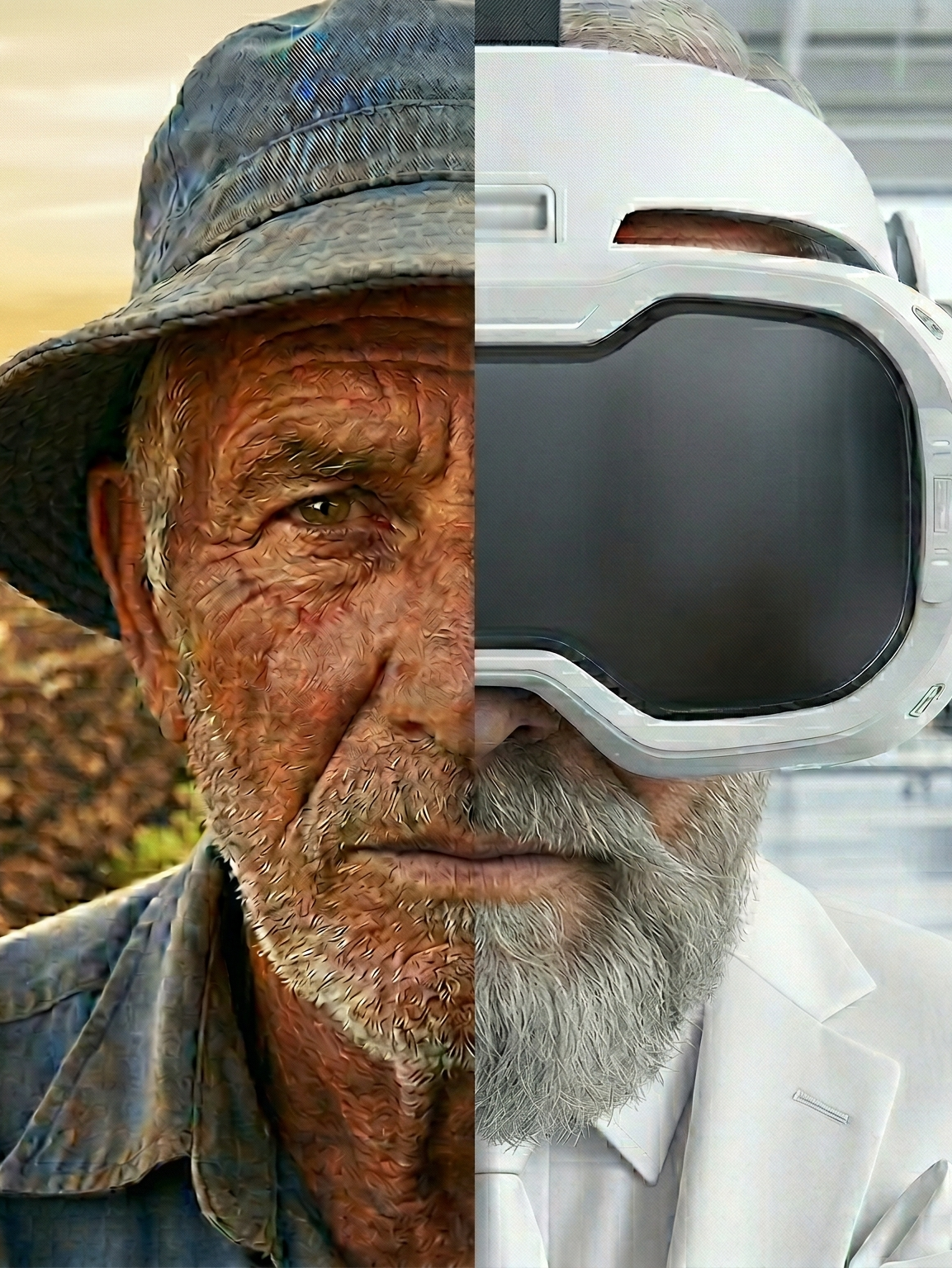
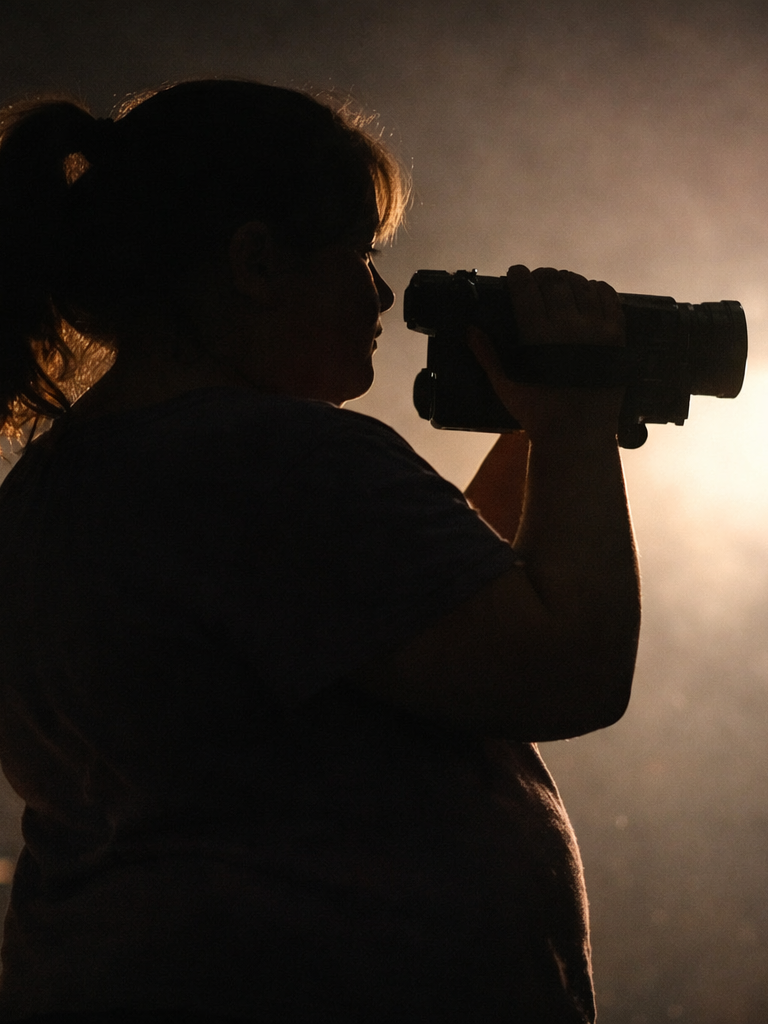
In Roko’s Basilisk, I wanted to demonstrate the possibility of being unable to react in any other way than our vision. First, that means that there needs to be an eye-tracking camera for the user. Second, the existence of that camera means it is possible to explore more vision-related options. I have tried an experience of a branching story that was beautiful and complex, but the frame was stable, like a cinema screen. I had in mind an embodiment experience, meaning that each viewer will feel like he is inside the film, willing to explore the place he/she is.
The solution was to show only part of the frame each time:
To challenge the viewer to look around the space, I guided Roy, the actor, to walk a lot from one side of the room to the other. Also, to throw the glass of water far to his right so a viewer will look after it and the frame will “jump” left.
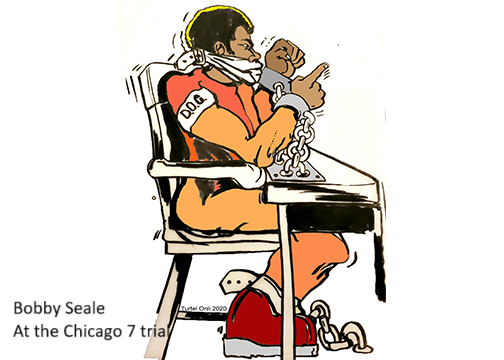
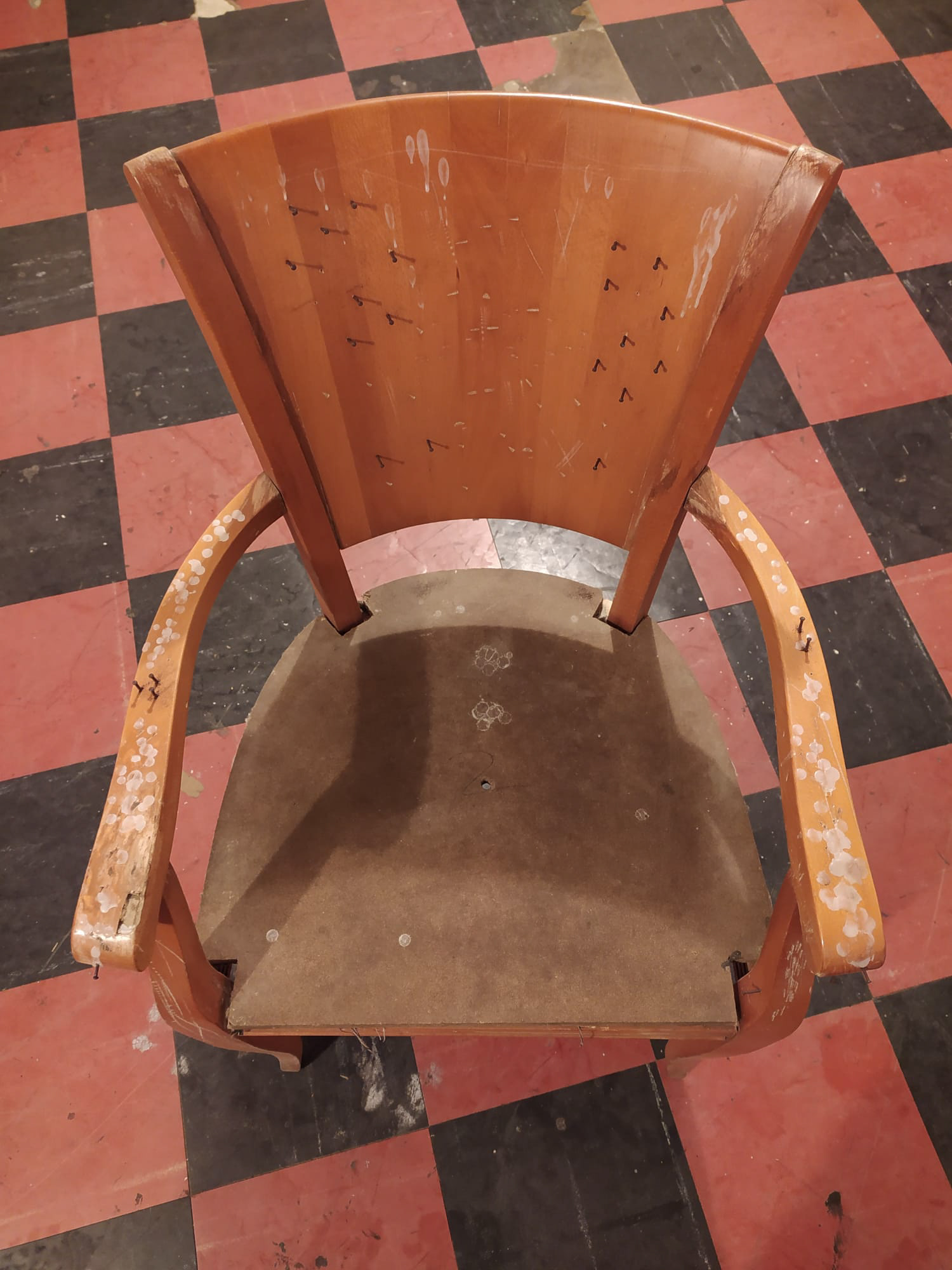
To increase the embodiment, the viewer could chain himself to a designated chair. The chair was used in the filming and was later designed to look like it was taken from a harsh investigation- nails were hammered in, candle wax was all over, and scratches were carved on the armrests. While watching the film and making decisions- the viewer can see both his armrests and the in-film armrests. The other reason for that shackling is to keep the viewer in one place, so the eye-tracking camera will not lose sight.
Next up was the Narrative- is there any required narrative for torture or is it freestyle? Is It possible that torture will have a narrative like a video game? From my limited knowledge of this kind of topic, usually, one side is trying to force the other to say or do something, and until the other doesn’t do so, the whole investigation can be looped over and over. Another option is to commit the action wanted and the interrogation is over. A third option, much more tragic, is that the interrogator is killing the interrogated person. Therefore, a narrative- two ends, and a semi-end that just brings us back to the start for another session.
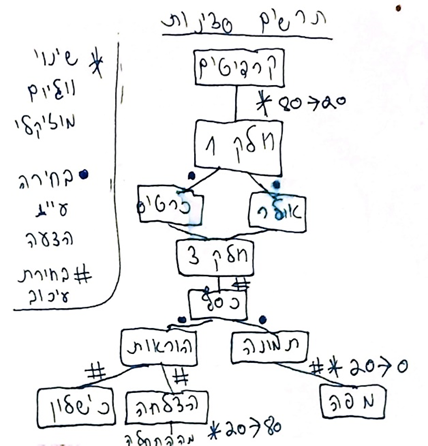
The option for a loop opens another door, for dealing with the issue of the usage of music for torturing people almost everywhere around the globe. Due to copyrights, I switched “We Are the Champions” by Queen to “In the Tall of the Mountain King” by Edvard Grieg. The music repeats in the length of 9 seconds.
Imaging hearing this for hours:
In these days of war, I want to underline the fact that many of the techniques used in this experience are used today all over the world to interrogate people, and I find it wrong. Above all these, music should not be used to hurt people. This work of art was created to demonstrate that anything we do- AI absorbs and learns. If we want to create better relations between machines and humans- we need to start with the way we treat each other. Peace!