When I enlisted into the IDF in 2015, my father told me that the military would introduce me to technologies that hadn't yet reached the civilian market, so it was important that after I'll finish my some of my service as a warrior (and thus became part of the family legacy) I'll make sure to transfer to the intelligence department. There, he believed, I would become familiar with technologies that only the military have, and when they hit the civilian market, I would be among the first to submit my resume.
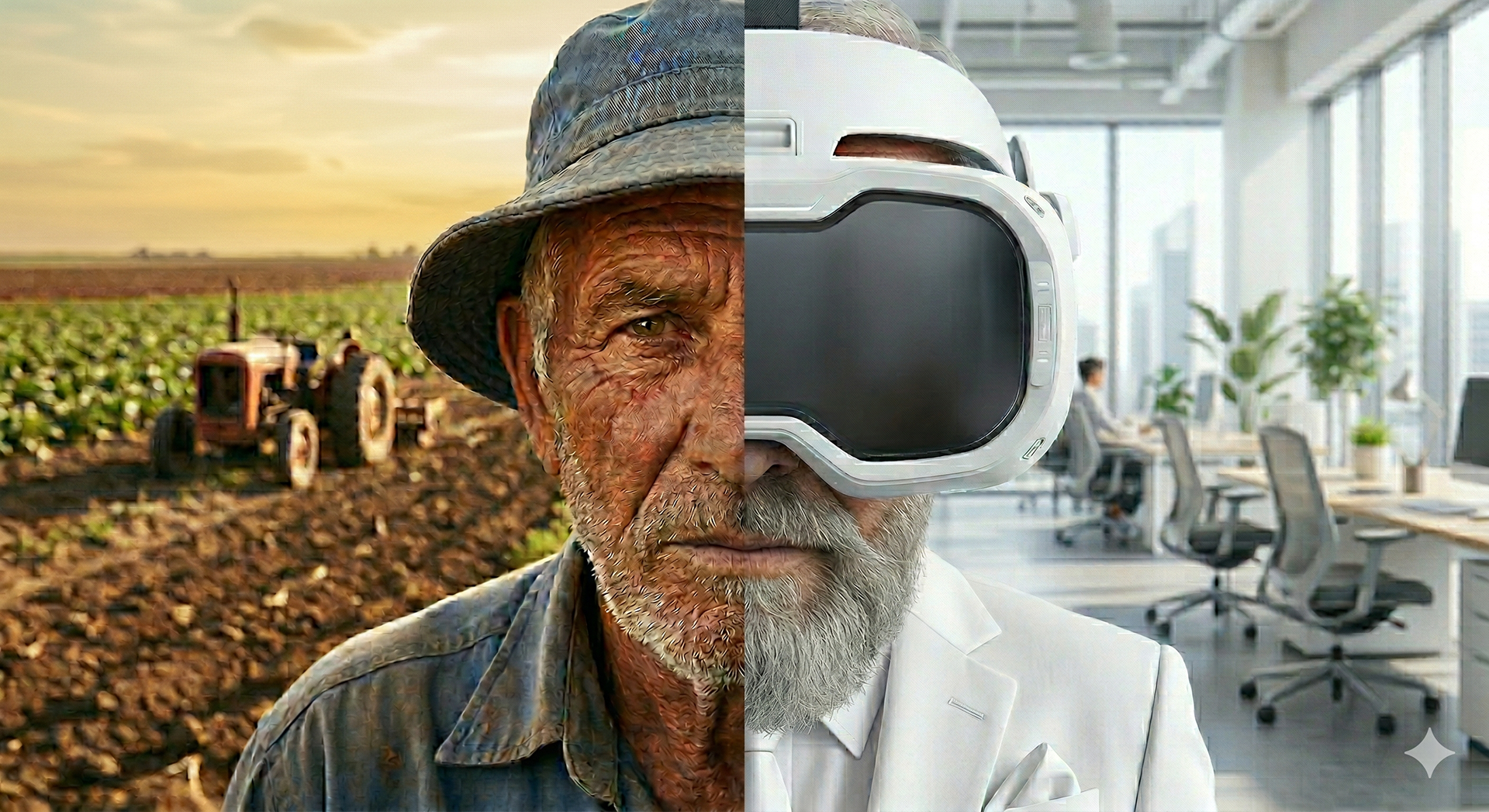
Made by Gemini
A Mechanical World
It is worth taking a step back, to the family I came from. My father was born in Israel in the early 1950s. His father was a private farmer and a general worker who found various jobs for himself, like driving or cultivating agricultural plots. The Land of Israel exported citrus fruits to the world and was not a pioneer in any industry. In an attempt to improve his socio-occupational status, my father was sent as a teenager to an afternoon program at the old Technion. The exciting technology of those days was nuclear physics. Additionally, over the years, he also studied high-voltage electricity. The toolkit available to technologically oriented people in those days was mechanical- dealing with machines that generate or consume electricity and rotate, cut, heat, cool, transport... a whole world of engines, pumps, axles, pistons, gears, hammers, screwdrivers. This was an era where, aside from medicine, the best thing a person could study was engineering.
In such a world, my father managed to integrate quite well as a certified electrician, a farmer with golden hands, and a love for getting them dirty. Even today, at an age when other people retire, you will find him plowing, repairing, manually screwing, and lifting weights. For him, this is a very healthy life. If not for Alan Turing, my father might have been one of the most sought-after people in the Jezreel Valley and the North. But the revolution Turing started during World War II only reached Israel in the late 1970s. A little too late for my father.

Zen and the Art of Motorcycle Maintenance (1974): the book that showed the pre-digital world that there's beauty in the work of mechanics
A Digital World
The mechanical world gave way to a digital world- transistors, sensors, chips, cameras, detectors. The dream was no longer to cultivate your own land, but to manage others within corporations that manufacture televisions, thermometers, and control systems that alert about malfunctions. An understanding of the world of mechanics served as a basis for computer science and new fields in engineering. At that time, we started using dial-menus to reach the relevant service representative, our dependence on English increased, and frequent business-trips abroad became a logical thing.
For my father, who is very proud that the farm is located in the pastoral north of the country, this was a blow. He always struggled with English and other languages, and preferred working directly with customers rather than through corporate communication. Fortunately for him, the change didn't happen all at once, so the fields in which he excelled accommodated his lack of adaptation to the occupational-economic-social situation in Israel.
Another family member of ours was born in the 1970s. He studied the fields of the digital world and works as a senior executive in one of the world's leading computing companies. There is no doubt that he is smart and talented, and everything he has is thanks to his own merits. However, it is interesting to note that he was born to a father who also grew up in the mechanical era. The leap between the mechanical and digital worlds was made well under his father's guidance. You could say that he and I went through a very similar life path, just a generation apart; when he looked for a job, he was required to present digital skills in the fields of hardware and software, which were in their infancy, and his competitors in Israel knew fairly basic English. In such an environment, it is easier to stand out. Of course, it was difficult to get to where he did, but the skill set he brought from home was suited for the extra effort he had to make to fit into the working world.
During my childhood, we had a simple computer at home with the Windows 95 OS. My brothers and I used to play all sorts of simple games on it, like Age of Empires 2 (1998). In an attempt to get me out of the house a bit, I remember my father offering to take me to the field with him to see his irrigation computer. When we reached the top of the plot, where the water pipes emerged from the ground, we would walk over to a plastic box. That was the irrigation computer. It had four buttons and outdated green-and-gray graphics. My father would curse the device, unable to understand why the computer hadn't released 6 cubic meters of water the day before, as he had programmed it to. It agonized me to see him go there and confront this technology every time. It made me realize that dealing with computers is frustrating. Moreover, it struck me as odd that this very simple-yet-inefficient equipment was called a "computer," exactly like the complex machine he was trying to keep me away from.
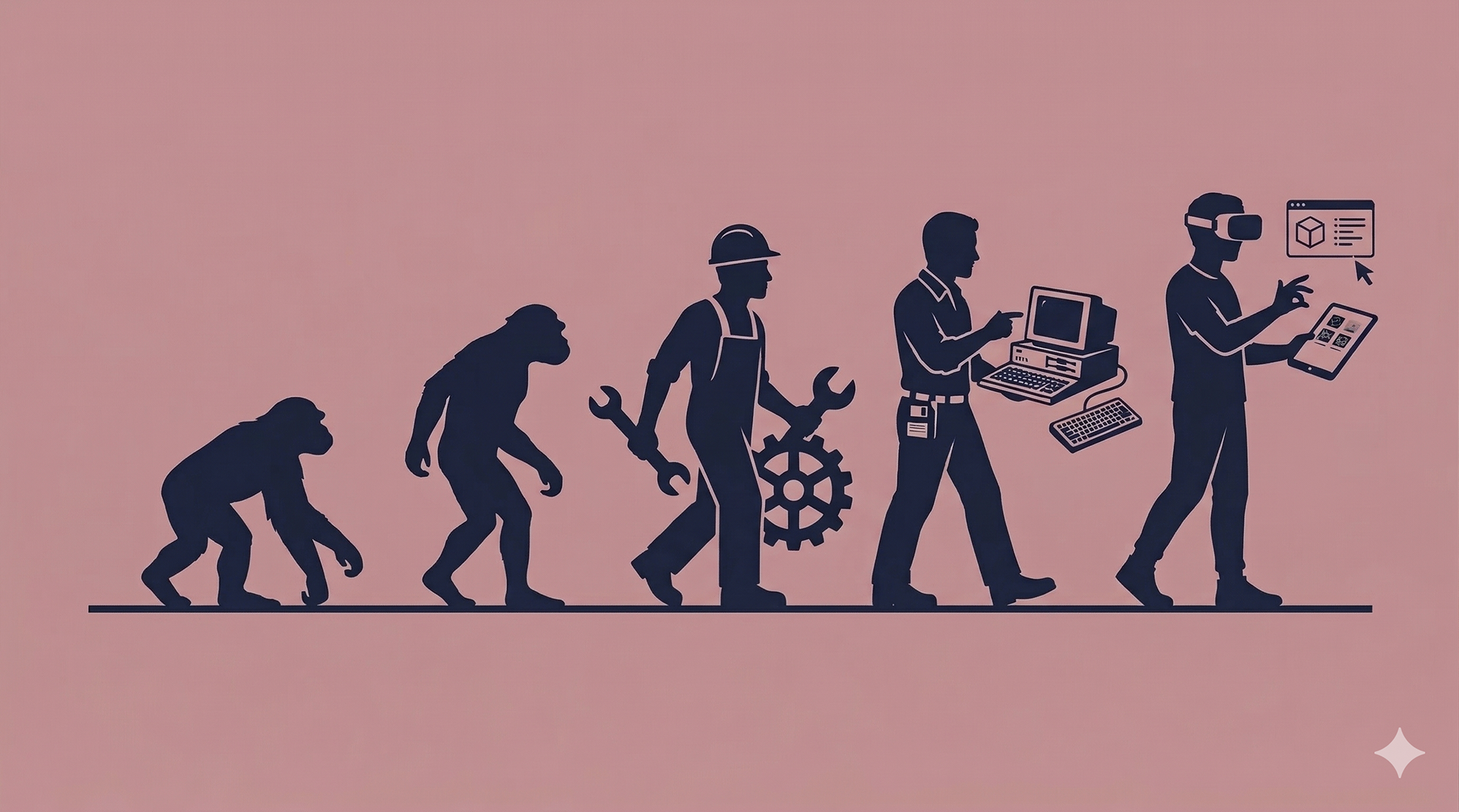
Made by Gemini
A Virtual World
Here the article takes a second turn. We are not currently in the mechanical age, nor in the digital age. True, machines surround us, as do electrical control systems. It is still useful for anyone to know how to use a screwdriver and type documents on a computer. The world we have entered is the virtual world, one of simulated data. A world where programming and generating code, understanding graphic interfaces, identifying lies on social media, cropping images, checking metadata, and many other capabilities are what's important. I know I am not telling you anything new here- you are living through this era exactly as I am! This world has opened up new opportunities for us and shifted our life habits once again.
Back to my father's advice in 2015. I think one of the things he meant was the internet. Not even web browsers, but the internet itself as data traffic between computers. The internet underwent significant development through the US military until it was fully released to the civilians and spread to Israel. The internet is undoubtedly part of the digital age, but in itself, it contributes little to the virtual age. You cannot immerse yourself in a virtual reality experience based purely on non-graphical data transfer. An online meeting is much more meaningful with the ability to display images, voice, and text, rather than just transferring raw data from one computer to another. When I enlisted, the internet capabilities I had on my phone were far more sophisticated than those I encountered in the military. I browsed using Chrome and was asked to complete training modules on Internet Explorer. Furthermore, I was trained to shoot a rifle manufactured in the early 2000s, drive an APC intended for the Vietnam War, and operate a digital system created for maneuvering in the Second Lebanon War. I accumulated anger toward my father for the terrible advice he gave me.
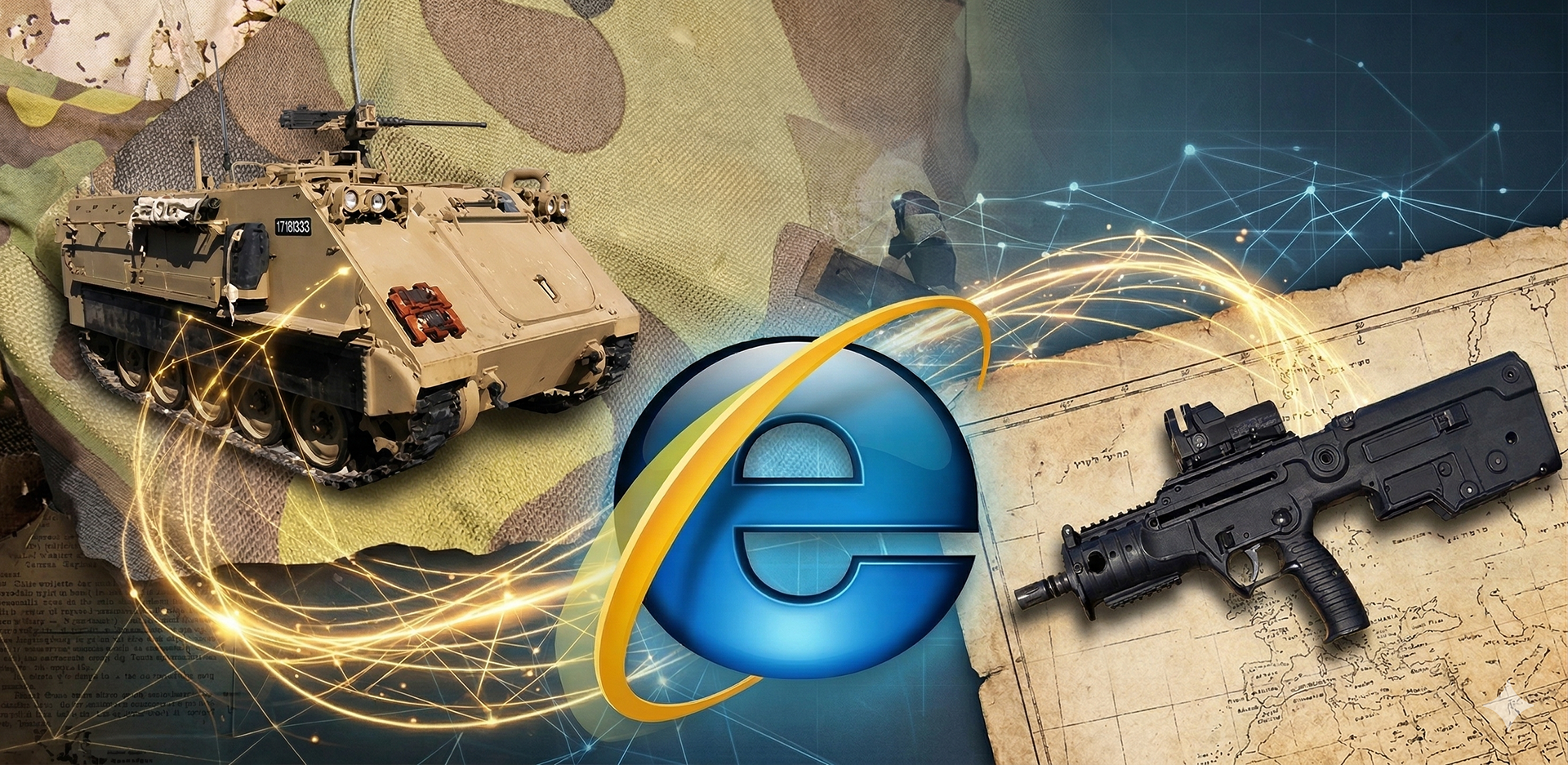
Some of the outdated technologies I used in my service:
Internet Explorer (1995-2022)
M-113 APC (1960s-2040 [expected])
IWI Tavor X95 (2009-present)
Collage made by Gemini
When I was discharged, I received a job offer for a position in the defense sector. At work, I realized that the military had managed to close the gap created by civic industry. I worked with web applications developed for the military. Some of the activity revolved around social networks and other mobile phone capabilities. All those relevant and up-to-date capabilities existed during those years but simply hadn't reached the units where I served. This is not the place to express my opinion on the military's role in shaping the employment market, but the opinion exists. In any case, my father's advice would have been relevant if the military maintained fluidity between the combat and technological units. Because it does not facilitate such transitions, I was condemned to spend three years of mandatory service doing a variety of physical tasks and was not exposed to any new technology.
I attribute my familiarity with new technologies to museum visits and, of course, to university studies. I got to know a huge variety of software and technologies that made my world increasingly virtual. First and foremost, these are the graphics engines that offer the ability to create a reality with no grip on our own. The limitations of the virtual world are not raw materials, nor necessarily the code, but the need and function that objects might fulfill.
Gaps - Mechanical Fathers and Virtual Sons
I recently moved into a new apartment and found my old camera from 2013. Its image quality (1080p) has long been defeated by phones, so I looked for another use for it. I thought I could turn it into a webcam, instead of the standard laptop cameras (720p). I used artificial intelligence chat to figure out how to do it. The first thing we had to understand was what cables could connect to it. I turned the camera on every side and looked for sockets until I found one- an AV connection. I had no idea what that was. I knew it was a relevant connection, but I don't think I've ever owned an AV cable, and I certainly haven't used one. So I asked the chat a bit more, and it laughed at me. I explained to it that it's not that I'm not technologically inclined, it's just that in the house I grew up in, we dealt with real electricity, the kind that electrocutes, and somehow I skipped the more complex generation of cables- VGA, SCART, FireWire... Who could have taught me about them anyway?
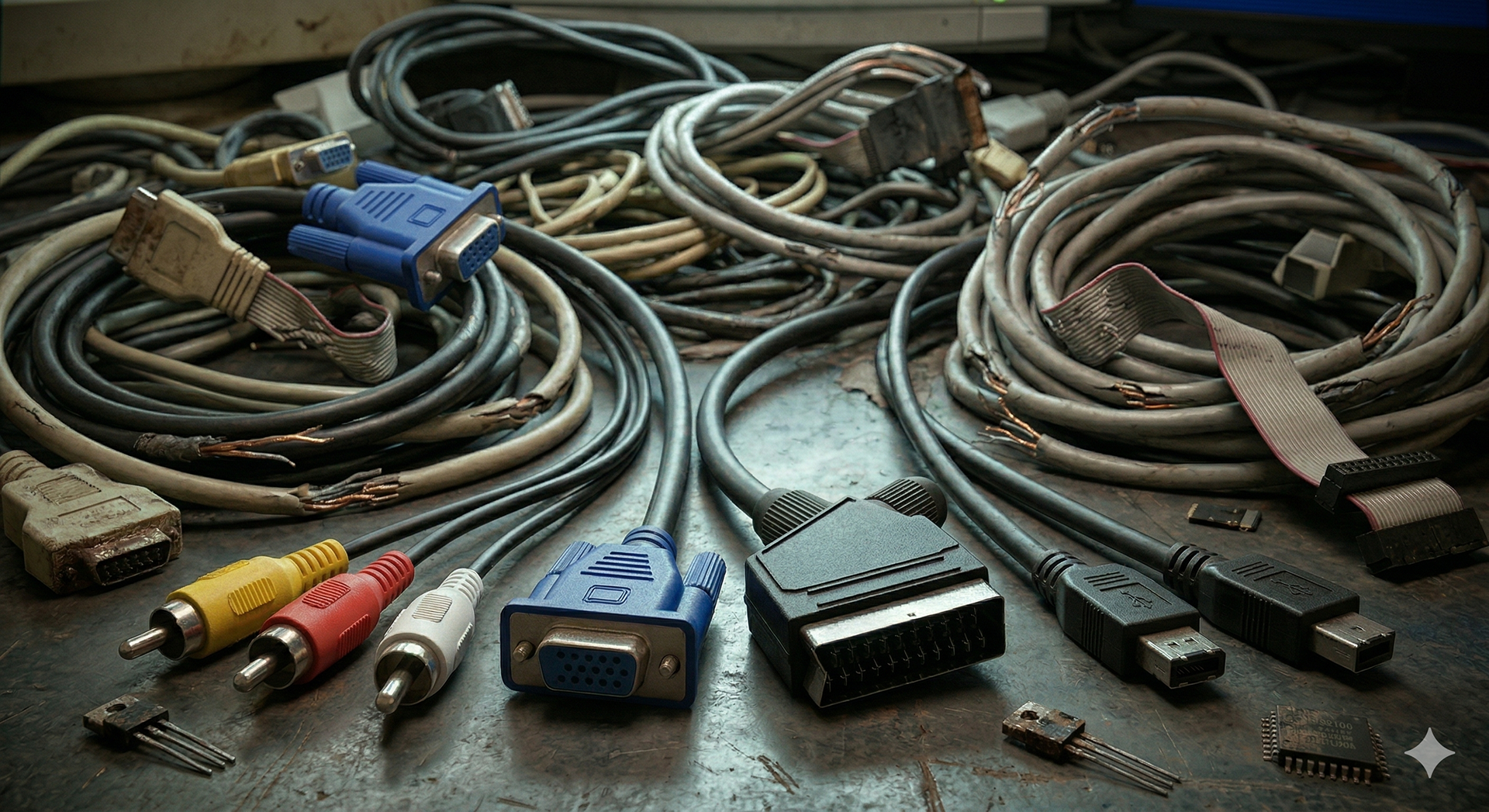
Made by Gemini
This is essentially the point of this article- in historical research, it is customary to examine all the events that led to a certain phenomenon, but here is a case that is decidedly unhistorical; to reach my technological-virtual orientation, I had to leap from the mechanical world my father taught me, over the digital world I never got to learn, straight into the virtual world. My perception of technology lacks the era of single-use cables, complicated protocols, and slow software. For me, this created an accelerated process where I must familiarize myself with the latest technologies without having anyone to consult with. The one person who could have given me perspective on the change is exactly the one who suffered from it- my father. The same person who didn't have enough time to exhaust the advantages of the mechanical age, and didn't have enough time to adapt to the digital age, is now forced to learn virtual tools.
I think this problem of a lack of adaptation is more acute than we think. People hold onto the technological understanding that suits them and will try to reject what lies beyond their learning capacity. For my father, there will always be a younger person around to help him with the phone and the TV. And for me, the internet helps when I encounter digital or mechanical problems.
My fear is that interfaces update too quickly- for instance, the interface on my parents' TV provider's streamer was recently changed. It was an extreme change that confused even me. As soon as I saw the change, I immediately turned to my father and told him that whenever he wanted to learn, I would help. He somehow managed without me. But when he replaced his last phone, a year ago, it was a catastrophe. His learning of the new OS is still ongoing.
I think we need to ensure that interfaces remain available to users even after transitioning to a new interface. For the older population, it's the difference between a comfortable life and usage distress. For us, the younger ones who can help, it's the difference between a relaxed evening and lots of calls to solve technical problems. Beyond just interfaces, methods of performing actions also need to remain accessible long-term; paying for public transportation in Israel is an example of this. What should someone who is used to paying in cash supposed to do now with a Rav-Kav card? Can they even resist the change without being fined?
These problems stem from the fact that policymakers, designers, and the main users are a younger demographic that has managed to learn the digital and virtual worlds. Most of us hold a smartphone, a credit card, a Gmail account... but the technologies we consider the norm today are bound to change. There is no certainty what the world of the generation after us will look like, and whether we will manage to integrate into it. We laugh at government ministries that keep fax machines and at the fact that some documents are sent to us by physical mail, but we will be just as problematic.